8/29/22

Mack’s Daily Minors Recap 8-28-2022 Games


AAA -


The Syracuse Mets ended their week against the Worcester Red Sox on a disappointing note, dropping a 7-5 decision in the series finale.


Nick Dini went 2-4, with two runs scored, and a home run.

Prospect stats:


C  Francisco Alvarez -      IL

DH Dom Smith - 0-4, .279

3B Mark Vientos - 0-2, .286

1B Daniel Palka - 1-5, .272

RHRP Bryce Montes de Oca - DNP


AA -

The Binghamton Rumble Ponies beat the Reading Fightin Phils 7-4 on Sunday night at FirstEnergy Stadium, taking five of six in the series, winning their fourth game in a row, and finishing their 12-game road trip at 8-4.

Ronny Mauricio hit his 24th home run and 77th RBI,

Postgame Notes: It’s the first time this season the Ponies have taken five of six in a series…Binghamton finishes 13-5 against Reading this year, winning all three series…Ritter scored two runs and has a five-game hitting streak.

C Nick Meyer: 1-for-4, 2 RBI 

RP Grant Hartwig: (SV,3) 2 IP, 0 H, 0 ER, 2 BB, 3 SO, 1.06 ERA


Prospect stats -

CF Jake Magnum - 0-4, R, .273

SS Ronny Mauricio - 2-4, 2-R, 3-RBI, HR, .256


A+ -

The Cyclones completed a six-game series sweep of the Jersey Shore Blue Claws on Sunday afternoon with an 18-1 victory. For the Cyclones it was their 13th consecutive win over Jersey Shore dating to June 23rd.

William Lugo, Shervyen Newton and Matt O’Neill – the seven, eight and nine hitters in the Brooklyn lineup – combined for nine hits, seven runs scored and 11 RBI to pace the Brooklyn bats.

Keyshawn Askew made the start for Brooklyn but lasted just 2/3 of an inning as he struggled with control and walked three batters to load the bases. The southpaw threw 29 pitches with just 14 strikes, and left the game with the bases loaded and two out. Nathan Lavender (2-1) got the final out of the first inning and tossed 3.1 near-flawless frames allowing just one hit while striking out seven. Jeffrey Colon went the rest of the way, tossing 5.0 innings of one run ball, scattering three hits and striking out nine.

RF Stanley Consuegra: 2-for-5, 3 R, HR (5), 4 RBI

3B William Lugo: 4-for-6, 4 R, HR (3), 4 RBI

SS Shervyen Newton: 3-for-4, 2 R, 2 2B, 4 RBI, 2 BB


Prospect stats - 

RF    Alex Ramirez - 1-4, R, RBI, .267

RHSP  Christian Scott - DNP

RHSP  Dominic Hamel - DNP

LHP   Keyshawn Askew -  0.2-IP, 0-R, K, 3.66


A -

  Sunday’s series finale between the St. Lucie Mets and Palm Beach Cardinals at Clover Park was canceled due to wet grounds and more rain in the forecast. 

Since the teams do not play again in the regular season the game will not be made up. 

Fans with tickets to Sunday’s game can exchange those tickets for any games next week.


Prospect stats - 

CF Omar De Los Santos   NG

RF Carlos Dominguez NG C Kevin Parada - NG

2B D’Andre Smith - NG

SP Blade Tidwell - NG

SP Calvin Zeigler - NG


“For more detailed information on the minor league teams and their recent results, see the links in the column on the right.”  

Mike's Mets - Jon Daniels


 By Mike Steffanos

Jon Daniels is looking for a new job. Should the Mets consider him for their PBO?

The Texas Rangers fired their president, Jon Daniels, last Wednesday. That ended Daniels' run of almost 17 years at the helm of that club. When he was first promoted to replace John Hart as GM in October 2005, the then 28-year-old Queens, NY native was a true baseball wunderkind. He was the youngest team GM in MLB history. Interestingly, one of Daniels' deals in his first winter as GM was to trade pitcher Chris Young to the Padres. 17 years later, Young is taking over the top role with the Rangers.

Of course, I didn't choose to write about Jon Daniels for that interesting bit of irony. For years, Daniels's name was linked to the Mets whenever they searched for a new GM. After Omar Minaya was fired in 2010, Daniels was a candidate for the job that ultimately went to Sandy Alderson. It's unclear if Daniels actually wanted the Mets' job back then. This was the post-Madoff Mets owned by the penurious Wilpons, and Texas was at the start of the golden era of the Rangers' franchise. Texas won division titles in 2010, 2011, 2015, and 2016. They also were a wildcard team in 2012. They made it to the World Series in 2010 and 2011, ultimately losing to the Giants and Cardinals.

Daniels was considered one of the top execs in MLB during those years, but the bloom has come off the rose over the last half-decade. The Rangers engaged in a teardown and rebuild that has born little fruit. They invested heavily in the free agent market this past offseason, only to find themselves 10 games under .500 and out of the playoff hunt in a season where an extra wild card team was added.

I don't know how seriously Daniels was considered for the job when the Mets were searching for a PBO these last couple of off-seasons. Jon Heyman mentioned Daniels in a tweet from last fall:

If the Mets were interested in Jon Daniels, it didn't translate into an interview. Perhaps the Mets were denied permission, as happened with so many candidates, or perhaps their interest was overstated. I don't know. It will be interesting to see whether the Mets elect to speak with Daniels after their season ends — hopefully in November. By all accounts, Billy Eppler was hired last winter with the knowledge that a PBO could be eventually hired and placed above him in the baseball operations hierarchy. Could that happen with Jon Daniels this off-season?

Billy Eppler has earned high marks in most quarters for his work in building a winning roster for the 2022 New York Mets. The job of running a baseball team has become more and more collaborative over the years, and Eppler has a reputation as a great boss who encourages collaboration. It's hard to make a case that Eppler has shown a need for a guiding hand above him. While Steve Cohen could undoubtedly afford to pay Jon Daniels to be the Mets' PBO, would he feel the need to do that? I guess we'll find out this off-season.

In the meantime, it seems to me that what happened with Jon Daniels in Texas is an interesting topic to explore for a club that hopes to build a long-term winner. For many years, the Ranges with Daniels at the helm seemed a great role model for that type of success. The Rangers did a terrific job with their farm system, particularly in signing talent from Latin America. Early in his tenure, Daniels won many trades because his front office was just plain smarter than the folks in other front offices with whom he was dealing.

To finish reading this article on Mike's Mets, please click here.

2023 Draft Prospect - OF - Dylan Crews


Dylan Crews 

OF              LSU


8-3-2022 -

Ranking the Top 30 2023 MLB Draft Prospects - 

https://www.oddschecker.com/us/insight/baseball/mlb/20220803-2023-mlb-mock-draft-ranking-the-top-30-2023-mlb-draft-prospects - 

1. Dylan Crews, OF, LSU 

Crews figures to be the best college prospect in baseball. He has had an OPS of 1.135 in two seasons with the Tigers and can hit for average along with power. He's got a bright future.


7-20-22 -

An early '23 mock: Top 20 picks - https://www.mlb.com/news/2023-mlb-draft-mock - 

1.  A’s:  Dylan Crews, OF, Louisiana State 

Crews was a solid high school prospect heading into the 2020 Draft but removed his name from consideration and headed to LSU. All he’s done is hit, with an OPS of 1.135 in two years with the Tigers. He’s going to mash, for average and plenty of power (22 homers in 2022), fitting the right-field offensive profile well. 


2023 MLB DRAFT - TOP 150 PROSPECTS - https://www.prospectslive.com/prospects-live/2022/1/15/2023-mlb-draft-prospects - 

#1 Dylan Crews Outfield, LSU 

Crews burst onto the scene as a true freshman, crushing baseballs, earning All-American honors almost unanimously. He carried that over into an equally impressive sophomore campaign in 2022. Crews produces elite exit velocities and balances the raw power with a strong approach and feel for the strike zone. He doesn't strike out and draws a ton of walks as well. In the field, Crews is likely destined for right field where his plus throwing arm and above average speed will be valuable assets. 

Crews is as close to a 5-tool talent as you’ll find in this class at the college level and could move quickly through the minor leagues given his position and skillset with the bat. He’s got a way about impacting the game in every aspect of the game. 

Reese Kaplan -- Baseball Stadium Architecture History Lesson


Winston Churchill is known for many things he said in his lifetime, but seldom would anyone associate the man with the game of baseball.  

Yet one of his most famous quotes immediately sprang to mind when I viewed today's video as it brings to the forefront the differences between how various architects treated the same premise -- how to convert a needed space for playing the game of baseball while taking into account the vagaries of the chosen space, the number and position of seats given to the paying customers who buy tickets, and the budget allowed by the team owners to transform design into reality.  

What Churchill famously uttered was, "Those that fail to learn from history are doomed to repeat it."

Thirty five year veteran architect Michael Wyetzner of Michielli & Wyetzner Architects took time from his busy schedule to analyze what worked and didn't work in the design of baseball stadiums around the USA.  

His video is a historical look at how the needs and styles evolved over time from ones you associate with the very beginning of professional baseball playing fields up through the cookie cutter styles in the 1970s through 1990s, and how it once again renewed interested in making ballparks look distinctive once again while retaining some of the economic benefits of the seemingly fast food approach to stadium architecture.  


Baseball as a game began in the 1840s but the first professional games started 29 years later with the Cincinnati Red Stockings who employed 10 salaried ballplayers.  Stadium construction at the time was done with wood, something not seen in today's modern era.  

Ironically it took until 1902 until a noteworthy example of wooden architecture evolved to house this team and it was called The Palace of the Fans.  It used symmetry which had not been an element seen before.  It also included "opera boxes" which were the precursor to today's luxury boxes and then Greek style architecture columns to support the regular grandstands.  

Seats behind the columns were obstructed and teams were forced to offer them at a reduced price.  This stadium held about 6000 people.  Together they formed the winged symmetry which is now so familiar in ballpark construction.


Shibe Park, by contrast, was offered up as a truly urban piece of architecture that had to exist within the city grid of Philadelphia.  The row houses surrounding it made them an extended viewing option where people could see into the stadium by peering from the roofs of their dwellings (which also happened in later environments in Chicago).  

The French architectural influence was pronounced with the roof lines and French Renaissance facade which made it look like a genuine and permanent part of the environment.  Unlike the wooden efforts of the past, Shibe Park employed brick for construction, as well as introducing domes, dormers and other elements never before seen.  


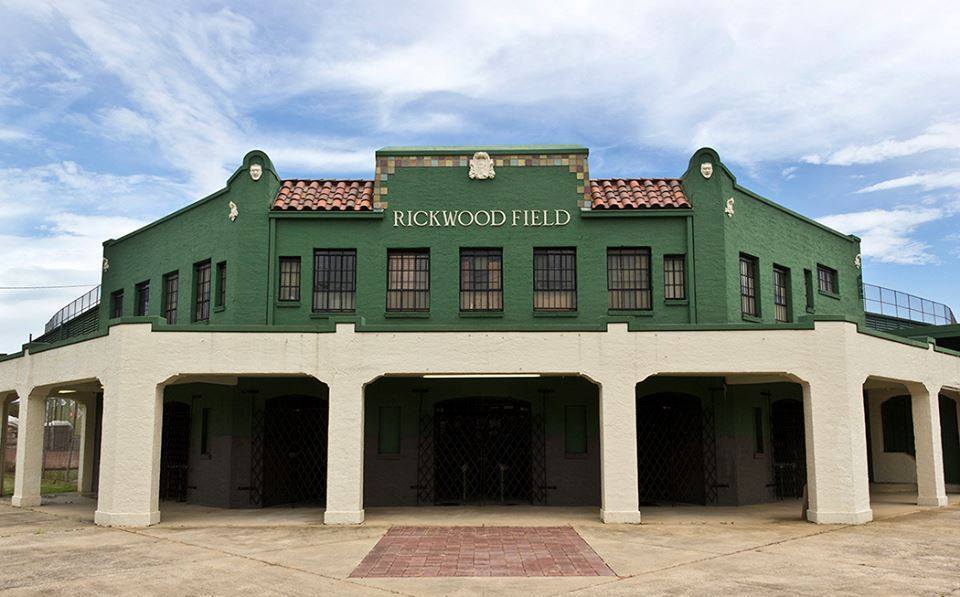
A very different approach was taken by the Negro Leagues which grew up in isolated parallel to the Major Leagues.  As an example, Wyetzner chose Rickwood Field in Birmingham, Alabama to showcase what was done for a playing environment when the owners pockets were not quite as deep and the playing was done for much lower ticket prices.  

Built in 1910, it uses a Spanish style with stucco being introduced along with a curved red tile roof as well as the now ever present sponsor advertising all over the interior to help fund the operations of the team.  Timing wise, it housed a 16 year old Willie Mays playing for the 1948 Negro World Series.  


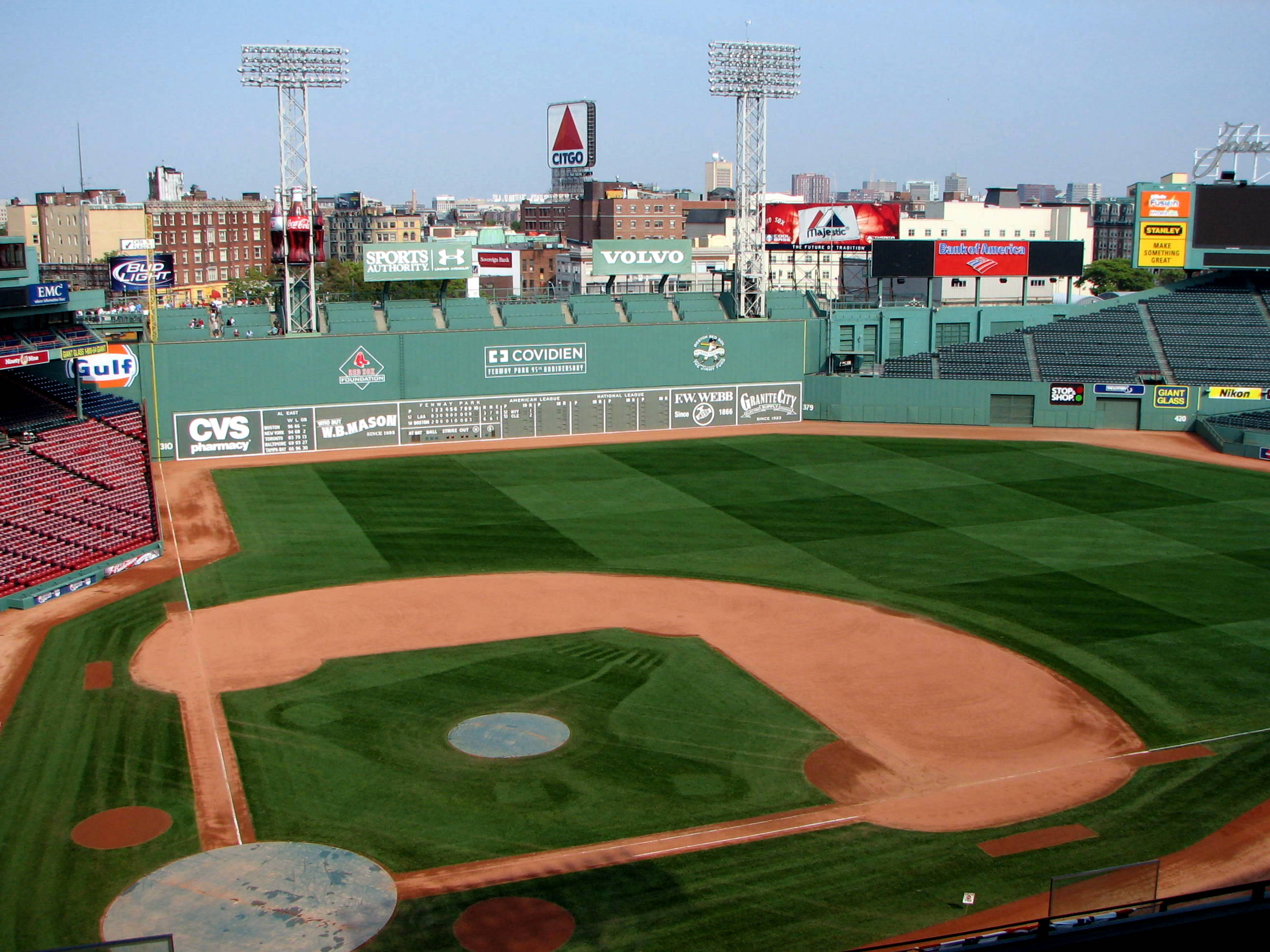
From here the video goes on to define the malleability of outfields and non-infield dimensions as required by city environments where they are built such as Lansdowne Street in Boston forcing the Green Monster to evolve in Fenway Park as well as some other architectural oddities that grew given urban architectural constraints.


He then goes on to discuss the 1923 construction of Yankee Stadium, also known of course as The House That Ruth Built.  It was constructed with the short right field fence to match up to the hitting style of the Bambino, a lefty slugger.  It no longer resembled a downtown office building but instead gave off the now accepted appearance of a ballpark.  It was also enormous in its dimension, seating an unheard of 58,000 people.  

He even draws a comparison to the Coliseum in Rome with the stylistic elements being somewhat similar.  It was made completely of limestone, a very expensive construction material, which reinforced the Yankees announcing to the baseball world that they were the richest team anywhere.  They also were the first to create a plaza in front of the stadium to allow people to gather before and after the game near the main entrance.  


Cleveland Municipal Stadium worked just outside the city grid and they developed a shape and size more reminiscent of what would happen in the future long past its 1930 construction.  It was so big, in fact, that they had to bring in temporary outfield walls because no one could hit it out of there.  It is significant in that it was the first ever stadium financed not exclusively by the owner of the ballclub, but it included public money from the taxpayers.  


The next in-depth look was San Francisco's Candlestick Park which contributed many design elements.  Columns were no longer an obtrusive part of the grandstands.  Light poles were positioned outside the playing area to allow night games to take place without blocking fans' views of the diamond.  

The construction matched the pattern of people moving outside the city centers and required massively large parking lots to house the fans and their vehicles.  There is no longer a corner bar within walking distance to the ballpark's entrance.  It opened up some negative but necessary design elements.  


The first truly different stadium to be built for this game was 1965's construction of the Astrodome in Houston.  Obviously the roof enabled games to be played regardless of the weather outside, but it also meant the necessity of fake grass being deployed as the roof kept necessary sunlight from allowing natural grass to grow.  It was unique for sure, but it was glaringly ugly and the whole Astroturf introduction changed the way the game was played for many years.


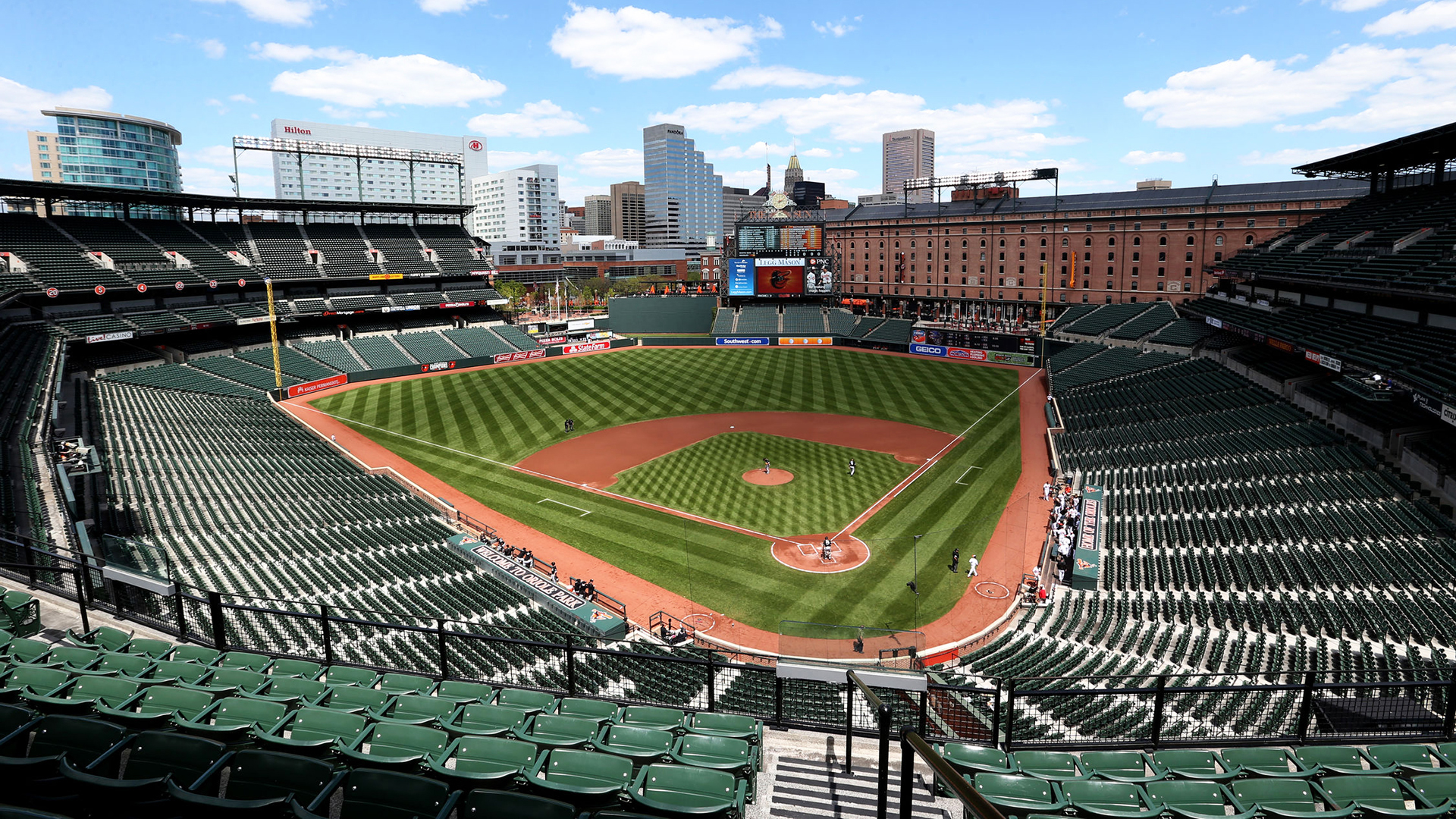
Camden Yards in Baltimore was the first stadium to express an architectural debt to the past while also housing a team on its way to the modern era of baseball.  It was an attempt to make the playing field a part of the city environment once again with walking distance access to restaurants and bars adjacent to where the professional games would be played.  

It employed brick as a construction and visual element to make the stadium appear both old and new at the same time.  They originally wanted to knock down the old railroad warehouse behind the stadium, but the Project Manager Janet Marie Smith insisted it be kept intact and now it is as much a part of the looks of the environment as the stadium itself.  It helped make Camden Yards a part of the city of Baltimore which was something missing from the off-the-grid environment seen elsewhere.  


Now during this retro era many good and bad examples exist.  Wyetzner cites Citifield as a glaring example of what can go wrong in design.  You see a lot of similarity to Camden Yards with the brick and steel elements.  However, the Ebbets Field influence can be seen but it is not a part of a central city environment out in Queens were it resides.  Its scale is gargantuan compared to Camden Yards and Ebbets Field.  Sorry, Mets fans...


A positive element in bringing together the city environment with the needs of the baseball team is Loandepot Park in Miami supporting the Marlins.  It incorporates the closing roof like the Astrodome once did, but it retains the feel of being entrenched in Miami with a big open window onto the urban environment.  The fan ramps are outdoors without being hidden inside the construction of the ballpark itself.  

There are streets running by both sides of the stadium with a park also being incorporated into the playing field environment.  The opened roof over tree-like supports forms a covered porch.  It was just a well done integration of playing baseball and respecting the city environment.  


If you have 19 minutes of time, watch the whole video which covers how stadium architecture has evolved in both good and bad ways over the past 100 plus years.  It's very well done and while you may or may not agree with all of the conclusions, it is a viewpoint many of us never considered with this level of detail from the standpoint of a professional architect.  Hats off to Michael Wyetzner for taking the time to put this together. 

8/28/22

2023 Draft Prospect - CF - Enrique Bradfield


Enrique Bradfield 

CF Vanderbilt 

8-3-2022 -

Ranking the Top 30 2023 MLB Draft Prospects - 

https://www.oddschecker.com/us/insight/baseball/mlb/20220803-2023-mlb-mock-draft-ranking-the-top-30-2023-mlb-draft-prospects -


7. Enrique Bradfield, OF, Vanderbilt 

7-28-22 -

2023 MLB DRAFT - TOP 150 PROSPECTS -

https://www.prospectslive.com/prospects-live/2022/1/15/2023-mlb-draft-prospects -


7. Enrique Bradfield

Centerfield, Vanderbilt 

Speed, speed and more speed. If Enrique Bradfield isn't the fastest player in the country, he's in the conversation. Bradfield will never been a thumper, but he's got elite vision at the plate, hardly ever expands the zone and walks just about as much as he strikes out. His frame still has room to add some muscle, so it wouldn't surprise scouts if he ended up with enough juice to run into double-digit homers at his pro peak. The story here, however, is a guy who really knows how to get on base and is a nightmare for the opposition when he runs. In the field, he's comfortably a plus defender in center with sublime routes to the ball and a comfort about his game, gliding to the spot. The profile fits somewhere between Jarrod Dyson and Kenny Lofton; a top-of-the-lineup dynamo.


7-20-2022 -

2023 MLB Draft mock

https://www.mlb.com/news/2023-mlb-draft-mock - 

7. Cubs: Enrique Bradfield, OF, Vanderbilt 

Bradfield’s 80-grade speed has been well-known by scouts since his high school days, though there were questions about his lack of strength and ability to impact the ball. He’s never going to be known for power, though he did homer eight times in 2022. That might not matter given that he went 46-for-46 in stolen base attempts in 2022 and has 93 steals in two seasons at Vandy.

Mack’s Daily Minors Recap 8-27-2022 Games


                                      Daniel Palka - FC: Herm Card

AAA - 

Syracuse finally beat Worcester, 6-4, on Saturday night. 

Daniel Palka did it again. This time, it was a 2-run blast in the 1st  inning. It was his team leading 25th of the season and he is now ranked 2nd in his league in the most home runs. 

Dom Smith added to the fireworks in the 2nd inning, striking a 2-run single. 

Prospect stats: 

C  Francisco Alvarez -     DNP

1B Dom Smith - 1-3, R, 2-RBI, .288

3B Mark Vientos - 0-4, .289

DH Daniel Palka - 1-2, R, 2-RBI, HR (25th (

RHRP Bryce Montes de Oca - DNP


                                    Luke Ritter - FC: John Canary

AA - 

The B-Mets scored eight late runs and defeated Reading 8-3. 

Luke Ritter hit a 2-run homer in the 7th. It was his 12th of the season.

Ponies starter Garrison Bryant went six innings giving up four hits and two runs with a walk and strikeouts. Jesus Vargas (2-8) pitched the final three innings surrendering two hits and a run with two strikeouts. 

Prospect stats -

CF Jake Magnum - 1-5, R, .281

SS Ronny Mauricio - DNP


                                                  Dominic Hamel

A+ - The Cyclones defeated Jersey Shore, 8-3.

Sammy Tavarez and Daison Acosta combined to toss 4.1 shutout innings of relief for Brooklyn and the ‘Clones pounded out 13 hits in a winning effort.

Top pitching prospect, Dominic Hamel, started the game with four quick scoreless innings.

Prospect stats - 

RF    Alex Ramirez - 2-5, 2-R, RBI, .267

RHSP  Christian Scott - DNP

RHSP  Dominic Hamel - 4.2-IP, 3-ER, 6-K, 3.46


                                                Calvin Zeigler

A - 

The Palm Beach Cardinals swept the St. Lucie Mets in a doubleheader on Saturday.  The Cardinals won game 1, 3-1, then pulled away late in game 2 for a 4-1 victory. 


Mets starter, Calvin Ziegler (0-3) took the loss as he stretched out to three innings. He gave up two runs on two hits with two walks and three strikeouts. 

Mets first round draft pick Kevin Parada (11th overall, Georgia Tech) made his team debut. He caught all seven innings and threw out a base runner. He went 0 for 3 at the plate with two strikeouts. 

Prospect stats - 

CF Omar De Los Santos  GM 1:  0-3, .265

GM 2:  1-3, R, .264

RF Carlos Dominguez GM 1:  2-2, RBI, .245

GM 2:  0-3, .243

C Kevin Parada - GM 1: 0-4, .000

2B D’Andre Smith - GM 1:  1-4, R, .400

SP Blade Tidwell - DNP

SP Calvin Zeigler - 3-IP, 2-ER, 3-K, .334, 0-4


“For more detailed information on the minor league teams and their recent results, see the links in the column on the right.”