11/6/19

Andres Gimenez May be Closer Than You Think - Tom Brennan


Many folks (sometimes me included) make the mistake of looking at a player's overall stats to weigh how good they think the player is.

In Pete Alonso's second minor league season, some made that exact mistake.  

"The Slugger Formerly Known as Peter"  was coming off a broken hand in his debut season, then got another broken hand injury in April that subsequent full season, and hit like crap when he returned - until, as I recall it, June 19 that season.

Then he flipped the switch, and he hit great the rest of the way.

I was not at all surprised, therefore, that in 2018, playing in AA, AAA and the AFL, he had 42 HRs and 146 RBIs in 159 games.  

Because I saw what he did after June 19 the year before.

Of course, we all know how 2019 went for Pete.  

POW-POW-POW!


Now, back to Andres Gimenez:


Andres got to play in frigid, winter-temperatures-in-April Binghamton in 2019.   

Making it worse, they also played lots of night games in April there - they should have had a Thermal Underwear Giveaway Night there.

His first game gave a clue: 0 for 5.  

He was 1 for 14 in his first 3 games.  

Hard to grip a bat when your hands are numb.

He rallied a bit, but then slumped, and slipped to .222 on June 29.  

OK, let's ignore that lousy, stinking start, OK?  

We forgot Pete's bad start, didn't we?  

Let's forget Andres' bad start, too.

How did AG do from then on, including Arizona's Fall League?  GREAT!

263 at bats, 83 hits (.316), 16 doubles, 4 triples, 10 HRs, 35 RBIs.

RBIs would have been higher if his teammates in Binghamton got on base more often.  They didn't.

OK, now looking at THIS Andres, the .316 one, do you now perceive him differently?

Add in that he only made an average of 1 error every 10 games at SS, remembering that some of those game were played on ugly wind-chill factor days, proving his rep as a stellar SS in the field - and what do you conclude overall?

That Andres is in fact very good; a future major leaguer, perhaps a high impact one when he adds some more muscle; and that should make you smile.


I'm smiling.  I won't wait for you to catch up.

Reese Kaplan -- Forgotten Setup Guys Part 3 of 6


Sometimes you just pitch for rotten teams and your career stats take a hit as a result.  The New York Mets had picked up a journeyman reliever from the Oakland A’s in a cash deal.  Usually players sold (Babe Ruth being the exception) are not the stars of the game, but a team simply needing a roster spot or an infusion of cash. 

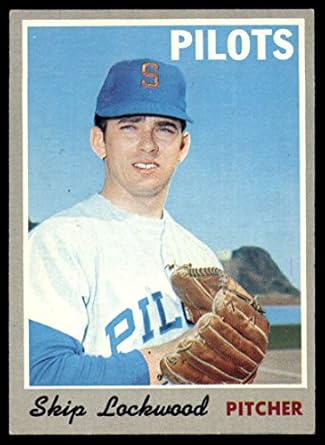
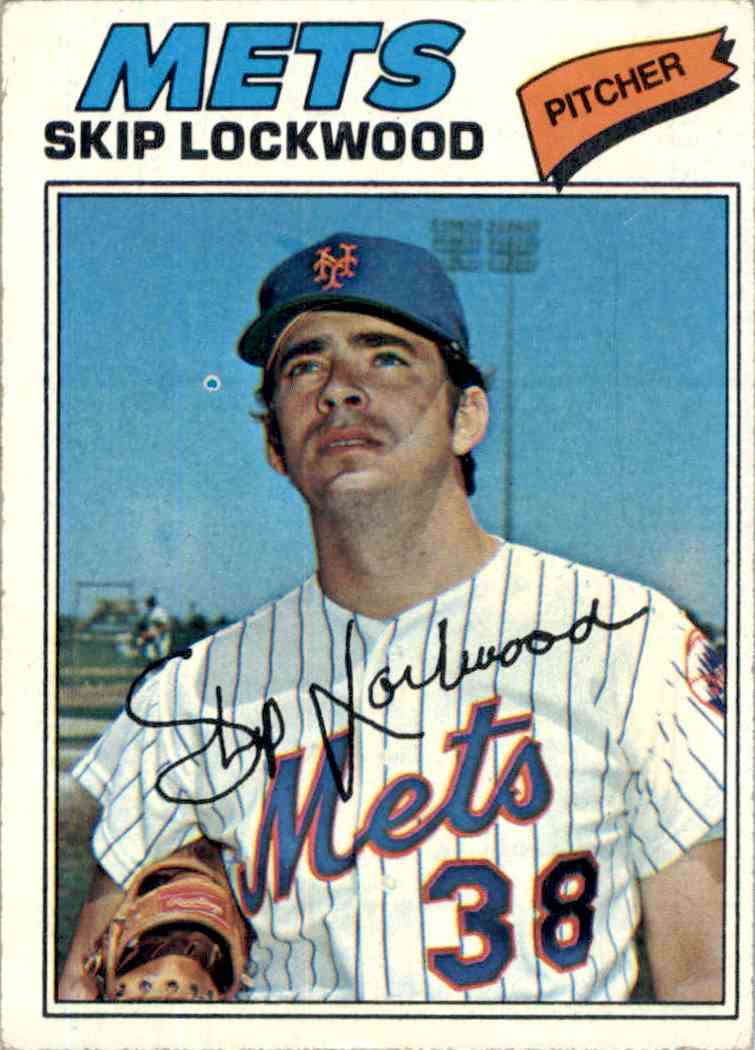
Skip Lockwood had started out as an infielder when he signed with the then Kansas City Athletics in 1964.  The scout who brought the contract offered him $35,000.  Lockwood liked that he was going to have a chance to play in the majors but felt he was being greatly underappreciated and said he had a single change to make to the contract, adding a handwritten number 1 in front of the amount, now having it read $135,00.  The scout got Charles Finley on the phone and Lockwood simply told him he was worth it and would help win games for the franchise.  Finley approved, but much to everyone’s chagrin, his initial foray into professional ball was not good.  He showed some promise of hitting for power and it earned him a trip to the majors just a year later but in 1965 he batted a paltry .121 to go along with striking out in 33% of his at-bats.  Since he had the classic, “trouble with the curve” and did nothing to distinguish himself over the next couple of years in the minors.  The Houston Astros selected him in the Rule V draft, but they ultimately returned him to the now Oakland A’s and they decided to see if he could parlay his strong throwing arm into a pitching career.  


This move proved to be a better route to a long-term baseball career.  During his first season as a pitcher in 1968 he appeared in both A and AA ball, going a combined 6-3 with a 3.60 ERA working both as a starter and as a reliever.  The expansion Seattle Pilots thought enough of his potential to make him the 46th overall selection in the draft and he followed them to Milwaukee where he served primarily as a starting pitcher between parts of the 1969 through 1973 seasons.  They were a bad team and his record reflected it, going a mere 28-55, but he pitched to a fairly respectable 3.75 ERA.

In 1974 he was traded to the California Angels as part of a 9-player deal and cash.  The Angels decided to convert Lockwood to the bullpen and his single season in Anaheim resulted in 37 appearances in relief, but the results were mediocre.  He finished with a 4.32 ERA and was then was traded straight up to the NY Yankees for catcher Bill Sudakis.  After failing to make the club out of Spring Training, he was released in April and for the third time signed on the with the A’s who then sold him to the Mets.


At age 28 something just clicked and his first partial year for the Mets in 1975 he went a mere 1-3 over 24 games but pitched to a remarkable 1.49 ERA.  In 1976 he continued his bullpen dominance, going 10-7 over 56 games which included 19 saves and a 2.67 ERA.  In 1977 he established a then club-record 63 games and saved 20 games.  In 1978 he was down to 15 saves.  He finished up his Mets career in 1979 with 9 saves and another 1.49 ERA.  Overall for the Mets he didn’t do too well when it came to wins and losses at a combined 24-36, but his career Mets ERA was just 2.80 and he saved 65 games. 

11/5/19

Mets Introduce Carlos Beltran as Their New Manager Tony Plate

                                                                   
The New York Mets officially introduced former Met Carlos Beltran, who played with the team from 2005-2011, as their new manager. He was a five-time All-Star as a player. He is the 22nd manager in Met History. He brings with him a superstar presence. 

When General Manager Brodie Van Wagenen announced Beltran to the media he said “welcome home.”


Beltran was a little overwhelmed and excited to begin his managerial career while wearing the same uniform as a player. He also said that he can’t wait to rewrite his story as manager of the Mets. He said that he has unfinished business with the Mets meaning he will push his team to win. He is looking forward to having baseball conversation. He will use data to benefit himself and create a decent vision.


Brodie said that Beltran has five qualities that stood out to him during his managerial search. They were poise, trustworthiness and that will go a long way, he is a student and has a willingness to learn, he has a commitment to beating opponents, and has an unrivaled appreciation and understanding of players.


Brodie said they are a players-first organization, and Carlos will be a players-first manager.  He added that Carlos' on-field and front-office experience will give him instant credibility in the clubhouse. He will command the respect of all his players.


Brodie’s goals during the off-season will be to create depth in the starting rotation, improve the defense at catcher and centerfield and improve the bullpen through free-agency or trades.


In other baseball news, congratulations to the Washington Nationals on their first World Series Championship, defeating the Houston Astros 4-3, which nobody thought would occur due to their past gut-wrenching post season failures. 


In my opinion, they were the “Amazing Miracle Nationals,” because they started off 19-31 which marked the worst fifty game start for any World Series Champion, and they had a horrendous bullpen which basically was the worst in baseball during the regular season.


Only the 1914 Boston “Miracle” Braves before them had ever rebounded to make the post-season after such a slow start, but those Braves teams did not have to go through a post season gauntlet quite like what lied ahead for the Nationals. They became the ninth team in MLB history to make the postseason after bottoming out so far.


The Nationals defeated the Brewers and their great closer Josh Hader in the Wildcard game. They upset the defending National League Champion Los Angeles Dodgers in the NLDS in five games. They then upset a tough St Louis Cardinal team in the NLCS in four straight games. 


They upset the mighty Houston Astros team that had that great pitching trio of Cole, Verlander and Grienke, and that had won 107 games during the regular season, in the World Series in seven games. The Nationals won four road games ,which was never done before in World Series history.


John From Albany - Winter Ball Update 11/5/2019


Harol Gonzalez made his fourth start for Gigantes del Cibao in the Dominican Winter league. 

After two scoreless innings, Harol made five pitches in the third to five batters getting the first batter to line out to shortstop, then a homer to Detroit Tigers AAA shortstop Will Castro and three straight singles.  After that, Harol’s night was over.

Harol’s line for the night was 2.1 innings, 2 runs, both earned, 5 hits, 1 HR, 1 walk, 1 hits batsman, 2 K’s, 22 pitches, 17 strikes.  Previous starts he has usually thrown 60-70 pitches as that seems to be his limit this Winter. 

Gigantes del Cibao ended up winning 12-2 over Leones del Escogido.  You can see the full box score here.

Overall, Harol is 0-2 with a 4.76 ERA in four starts, 11.1 innings.  He has allowed 15 hits, 7 runs, 6 earned, with 5 walks and 10 K’s.

Harol Gonzalez had a tremendous 2019 for Binghamton and Syracuse.  After going 6-4 with a 3.14 in 17 games for Double A Binghamton, he went 6-0 for Syracuse with a 2.68 ERA in 8 games for Syracuse.  This was a big bounce back for him after a tough 2018 campaign.  In 2018, Harol pitched in St. Lucie, Las Vegas and Binghamton.  His 2018 Binghamton stats were most glaring as he went 0-9 in nine starts with a 7.79 ERA. 

Other Mets players in the Dominican League this Winter include 2019 Syracuse IF/OF Arismendy Alcantara.  Alcantara is hitting .240 in 16 games, 12 hits in 50 at-bats with 6 doubles, 2 triples, and 3 stolen bases. 

A 27-year-old switch hitter, Arismendy played 2b, 3b, LF, CF, and RF for Syracuse last year.  He showed power and speed.  I thought he would a perfect call-up to NY for the bench, but it never happened in 2019.  Scheduled to become a minor league free agent yesterday, Here’s hoping he is back in Syracuse next year. 

Another 2019 Syracuse Met, Rymer Liriano has 11 at-bats with one hit for a .091 average in 6 games.

Binghamton and Syracuse pitcher Adonis Uceta.  In 7 games he is 1-0 with a 0.00 ERA in 5.1 innings with 5 K’s, 3 walks and 2 hits for a 0.94 WHIP. 

St. Lucie’s Carlos Hernandez also has joined the league going 0-1 in two games with an 18.00 ERA.  He went 2 scoreless innings his first time out but then didn’t record an out his second outing giving up 4 runs on 2 hits and a walk.   

Still no signs of Edwin Diaz or Jeurys Familia yet.  

Other leagues in Puerto Rico and Venezuela will start soon with more Mets players expected.  


Tom Brennan - A LOOK BACK AT RUSTY STAUB, LE GRAND ORANGE


Faithful Macks Mets reader Gary Seagren recently mentioned that he had much love and appreciation for Rusty Staub:


Le Grande Orange.

Rusty, always a consummate gentleman, went to Jesuit HS in Louisiana.  Maybe he learned some gentlemanly manners there, under threat of corporal punishment.  

Here's another "always": during his 9 seasons with the Mets, he always was a Mets favorite.

In 1962, at age 18, he he played minor league 140 games in the Houston organization in Class B, and done good, I reckon:

He scored 115 runs, had 23 HRs, 9 (yes, NINE) steals and 116 walks.

In 1963, the Mets' fellow expansion team, Houston, was going nowhere, so they let the 19 year old Rusty play 150 major league games in which he hit .224.

In 1964, at the advanced age of 20, he hit just .216, and got sent down to AAA for a booster shot, where he hit .314 in 71 games.

That was it for the minors.  

Back with Houston at age 21, he hit .256, then .280 as a 22 year old, and blossomed in 1967 as a 23 year old, hitting .333 with 44 doubles.  

After another very solid year in 1968, he went to Montreal and in 3 iron man seasons, Staub missed just 6 games, averaging 28 doubles, 6 triples, 26 HRs and 90 RBIs with a .404 on base %.  In those 3 seasons, he also stole 24 bases!

Then the Mets got him, in  a biggy of a trade in 1972 in exchange 1B-outfielder Mike Jorgensen, SS Tim Foli, and OF Ken Singleton.  Both teams benefited there.

In 1972 through 1975, The Orange Man as a Met hit as high as .293 and set a Mets record for RBIs in a season (105) that stood for years.  He had a tremendous post-season for the Mets in 1973, too, helping them almost win what would have been their 2nd World Series in 5 seasons.

The Mets foolishly trade the Staub Man along with no-name pitcher Bill Laxton for aging lefty pitcher Mickey Lolich and great outfielder Billy Baldwin - you remember him, don't you, he played 9 major league games.

Foolish trade?  Yes!  Absolument!  Mais oui!

Rusty played 3 years with the Tigers, missing just 5 games, and averaged 31 doubles, 20 HRs, and 106 RBIs.  Made the Mets look like idiots.

Why traded from the Mets?  The Daily News noted that his $120,000 salary was too high for the Mets' tastes!! "In 1975, Staub became the first Met to drive in 100 runs in a season (105), but by then the team was in decline and looking to dump payroll. 

"As the second-highest-paid player on the team ($120,000) behind Tom Seaver, Staub was traded to the Tigers for veteran lefthander Mickey Lolich. It was the first in a series of bad trades (that later included Seaver) made by the M. Donald Grant regime."  Did Grant's "M" stand for Moron?  I wonder.

Anyway, after a brief return to Montreal, he had a nice season at age 36 with Texas, hitting .300, then returned to the Mets for the last 5 of his 23 major league seasons, during which he became a premier and heavily used pinch hitter.

In his career, he pinch hit 418 times, had 350 official ABs, and was .277/.356/.402 with 92 RBIs!

In his last 15 years, it should be noted that he was V..E..R..Y T..O..U..G..H to fan, too, up 6,940 times while fanning just 451 times (a K every 15.4 times up). Some players today fan once every 15.4 PITCHES!

Overall, he went to the plate an amazing 11,229 times, drove in 1,446 runs (compare to David Wright's Mets record of 970 RBIs) and walked 1,255 times vs. just 888 Ks.  He had 292 HRs, but grounded into DPs 297 times.  

The six time All Star, sadly, never got as much as 10% of votes on Hall of Fame ballots in any season, a victim, no doubt, of his lack of speed.

Speed or no speed, we loved Rusty, and he loved NY.  Orange, I am sure, became many  a Mets' fans' favorite color.

Mike Freire - Fleeting Thoughts

Thoughts Can Be Fleeting

Good Morning, Mets' fans.

There have been some big changes in the Mets' universe since the last time I composed one of my "Fleeting Thoughts" articles.  

The team has a few more vacancies due to a list of players opting to become free agents now that the 2019 season is officially over, to include Zack Wheeler.  We are also a few steps closer to having the 2019 Rookie of the Year and the 2019 Cy Young Award "trophies" on our mantle (at least we better be).  

But the biggest news has to be the completion of the managerial search that has encompassed the last month or so.

Let's get on with the actual article!

1.  As I hinted at above, the Mets have a new manager and it isn't who many of us thought it would be at the outset of the process.  I openly asked for the team to consider Joe Maddon (before he went to the Angels), Joe Girardi (before he went to the Phillies) and Eduardo Perez primarily due to various levels of managerial experience. 

Instead, the team chose Carlos Beltran to take the reins for the 2020 season and beyond which should be fascinating to watch.

By all accounts, Carlos is a baseball savant and he has the unique ability to relate to players regardless of where they are from.  That will serve him well as he moves forward in his fledgling managerial career.  

BUT it is also fair to highlight his lack of experience as an actual manager, along with his outward appearance as a bit of an introvert.  I like that BVW is willing to take a chance and think "outside the box" but I hope that Carlos gets paired with a veteran bench coach to help him when he needs some advice.  

The early rumor is that Terry Collins might be tasked with that role, which is a solid choice and one that should make Macks Mets' Reese Kaplan happy (not).

2.  Roster turnover is inevitable in today's version of Major League Baseball and the upcoming offseason will be no different for the Mets.  

The biggest name on the list of impending free agents is Zack Wheeler.  His departure will open a rather large void in the starting rotation as he was arguably our third best starter last year.  

The rotation is still in good hands with DeGrom, Syndergaard, Stroman and Matz in place.  But, there is precious little depth behind those four pitchers, so reinforcements are needed.

The Mets should extend a qualifying offer to ZW so they can at least recoup a draft pick if he leaves the team over the Winter.  The bigger question is what would you pay to keep him long term?  

It will likely take something like 4 years and 75 million dollars to get his attention, which is a lot of cash for someone who has been a bit erratic an injury prone over his career (the last two years notwithstanding).  

Can they take that money and sign a couple of lower priced free agent starters instead?  If so, that would backfill the rotation and provide some depth in the process which MAY be a better use of limited resources.

3. I lived in the Tampa area until recently, so I had the opportunity to watch the Rays on a regular basis.  That is a team that has a limited payroll if there ever was one, and it is not necessarily by choice due to a bad stadium situation and a lack of attendance.  

With that said, they have averaged 83 wins per year over the last 5 years with an average payroll of $70.4 million per season ($848,193 per win).  The Mets have averaged 82 wins per year over the last 5 years with an average payroll of $130.8 million per season ($1,595,122 per win).  In short, the Rays are doing more with less, or at least they have been MUCH smarter with their funds then we have.

So, why not copy someone who is doing things better then you are?  While I am not advocating a full scale replication, I do think the Mets can learn a thing or two about bullpen construction by studying the Rays model.  

Instead of a star-studded bullpen, the Rays have a variety of pitchers who are each excellent at their "role". Yes, they have the funky "opener" strategy (which is by necessity), but they also have a shutdown bullpen that is among the league leaders year in and year out despite spreading the wealth.  

The Mets should copy this strategy by bringing in a bunch of arms for Spring Training and building a deep bullpen through competition that can compliment the talent already on hand.

4.  I am familiar with the whole "cheap Wilpons" mantra, but let's assume that BVW actually has some leeway and can backload a few contracts this offseason to align with a bunch of money coming off the books in 2021.  Where would you spend the money? 

As of this writing, I see issues in the back of the rotation, the middle of the bullpen and in center field.  Without a lot to deal from in the upper minor leagues, that leaves free agency or the trade route as the only options for improvement (or both).

We have the defending National League East Champions (Braves) and the defending World Series Champions (Nationals) still in our own division, so standing pat is not really an option if competing for championships is truly the goal, right, Brodie?

Until next time, stay safe.

11/4/19

Baseball Rules I'd Like to See Changed - A Repost: Tom Brennan


BASEBALL RULES I'D LIKE TO SEE CHANGED

I wrote this article in 2018, and thought I'd repost it.

Yes, one of the rules I wanted to see changed in the article below will be implemented in 2020.  

What do you think about the others I've listed?

And what rules not discussed here would you like to see changed?


Baseball is a game designed with genius, and has many rules established to make it a lasting and cherished game to millions.

Some rule changes could make it better, in my opinion.  Here are mine:

1) 40 MAN ROSTER RULE SHOULD BE CHANGED

Jack Reinheimer gets called up, Peter Alonso does not...which of course makes no sense at all, talent-and-performance-wise.  Peter has over 30 homers and leads all of baseball, majors and minors, in RBIs.

We hear that Peter won't be added to the team in September because he'd have to be added to the 40 man roster.  I say he is being discriminated against.  

I say, why not suspend the 40 man roster rule as it pertains to September call ups, allowing a team to increase its September roster to a maximum of, let's say, 35.  That would allow Peter to be called up.  

That would allow a player like Patrick Kivlehan to be called up, too.

Kivlehan gets no ink here, or elsewhere, because he is not on the 40 man roster and is unlikely to be added to it.  Yet, the 28 year old has had 199 major league at bats in 2016 and 2017, hitting just .203, but with 10 homers and 28 RBIs. 
 
In his last 10 AAA games, he is 15 for 38 with 7 homers and 15 RBIs.  Wouldn't it be nice if a guy like this, hitting .304 in 87 games for Las Vegas, could get called up and get another chance to show he is more than a journeyman in September?

(FWIW, Kivlehan hit 32 minor league HRs in 125 games in 2019, but did not get called up in 2019).

Oh, but Peter Alonso would not be called up anyway because that would "start his clock."  So...

2) PLAYER CLOCK RULES SHOULD BE CHANGED

If an Alonso is called up in September, change the rule that it will NOT affect his time on the so-called "clock".  It is another arbitrary hindrance.  

What do you think, if someone went to Alonso and said, "buddy, you have a choice...we can not change the "40 man and clock" rules and leave you in the minors, or change them (as Tom Brennan suggests) and have you come up for September".  

What choice do you think he, or anyone in his shoes, would happily make?

I know the fans would love to see him, fully ready or not.


3) YEARS TO FREE AGENCY RULE

Pitchers like Matt Harvey or Jake deGrom play Russian Roulette every time they pitch - will they stay healthy, or have a career-damaging injury on their next pitch?  

I would advocate that pitchers get to free agency a year earlier for that reason.  Hitters can get hurt too but not, in most cases, as suddenly and impactfully and catastrophically as a pitcher can.  

So I would shorten pitchers up to free agency by a year.

Hurts the teams somewhat, but it is the right thing to do for them.  Jake makes nowhere near as much as his peer, Max Scherzer, because of these rules.  Change it.


4) INCREASE ROSTER TO 26 PLAYERS

Back when I was a teenager in the 1960's, teams had 10 pitchers and 15 position players.  Now, it's 12 and 13.  That's 2 less position players, if 15 minus 13 is tough to calculate in your head - just here to help.

So, hitters like a Kivlehan or a Luis Guillorme get relatively less opportunity to make teams for any meaningful amount of playing time than in days gone by.  One more player on each team would drastically increase a team's in-game versatility. 

For instance, you want to carry 3 catchers?  Go ahead.  I think it would add to the game.


5) DITCH THE SHIFT

Jay Bruce moaned earlier this year about it being a fact that with the shift, almost any hard hit ball to the right side not in the air is an out for him.  Some say, "learn to hit to all fields like a Jeff McNeil then."  

Good for Jeff, not good for a Jay Bruce. I say the shift's thievery robs guys of their strengths - I don't want a Jay Bruce to have to alter his power game just to try to thwart a shift.

Make it so that when Jay is up, the shortstop must remain left of 2nd base until the pitch has reached the hitter.  And when a righty is up, no 3 man shifts on the left side.

I'll bet that will boost teams' major league averages by 10-15 points.  Right now, no team is hitting .270, and only 2 above .260.  That's 2 out of 30 teams above .260.  That stinks. 

Change the rule.

What do you think?  

Do you agree?  

Any others you would want changed?

Reese Kaplan -- Forgotten Setup Guys Part 2 of 6


When Seth Lugo and Robert Gsellman came up at about the same time, they took on a role initially that is not too prevalent in today’s game – the swingman.  They started, they relieved, they just did what it took in the attempt to help the ballclub.  Back in the decade of the 1980s the Mets had a GOOD Terry helping them in this regard – one Mr. Leach.


Terry Leach was an extreme submarine/sidearmer whose hand threatened to scrape the mound with each delivery.  He initially came up to the big club in 1981 for an encouraging 21 game trial during which he went 1-1 in middle relief with a single start and a single game finished, but his ERA of 2.55 suggested this late blooming 27 year old rookie might indeed have something.

In 1982 he produced a similar 21 game record, this time again having a single start but 12 game finishes.  His 4.22 ERA was a hefty jump which merited him time back in the minors until he turned age 31 during the 1985 season when he appeared in 22 games, a 2.91 ERA and a 3-4 record, starting 4 games and finishing four games.  Despite that good performance he was mostly in Tidewater for the World Series year of 1986, only appearing in 6 games but still earning a ring awarded many years later.


In 1987 it would appear he’d finally click for good but the circumstances were not how you’d like to have it happen.  Doc Gooden was out on rehab and Bobby Ojeda was down with a season-ending injury, so despite being cut in Spring Training he was brought back to the big club to become a starter.  All he did was turn in an 11-1 season, at one point reeling off 10 straight wins, finishing with a highly respectable 3.22 ERA. 

In 1988 he went back to the pen, this time appearing in 52 games with 92 innings pitched to an impressive 7-2 record and a 2.54 ERA.  That’s not too shabby for a guy who didn’t throw his first pitch until age 27 and not really getting a shot out of Spring Training until age 34.  He added three saves and was perfect in an aggregate 5 IP against the Dodgers in the NL Championship Series. 

The Mets then made one of their franchise’s many ill-conceived trades, sending him to the Kansas City Royals for the immortal Aquedo Vasquez who never made the majors.  Leach didn’t do much there and was released, hooking up with Minnesota where he made his second trip to the World Series.  He finished his career with a couple of decent years with the White Sox at ages 38 and 39. 

After retiring from baseball, Leach wrote a book called, Things Happen for a Reason: The True Story of An Itinerant Life In Baseball.  It covered his journey from the Independent Leagues in Baton Rouge in 1976 through being the final cut due to age or perceived ability year after year.