11/3/19

Mack – Top 25 2020 Mets Prospects - #16-20


A man named John Sickles use to have a great series of top 30 prospects for all the major league teams. For some reason, the feature was discontinued.

John would rate the players with the A through F system, using A as a can’t miss prospect, B a probable, C a possible, and F… well, you can figure out what F meant.

The last top Mets prospect list he had led with a sub-headline of “ if you love C+ prospects than you are going to love the Mets.

Nothing much has changed. We have a couple of A/A- guys, a handful of B+/B/B- players and the rest are C+.

Was John right? Well, he did not have Jeff McNeil’s name come up until he ended the series with players in one paragraph entitled ‘honorable mention’.

Here’s my current list of my top 25. I will post this in five separate posts, starting last week for numbers 21-25.

Here’s this week’s #16-20:

PC - Ernest Dove
20.    RP Franklyn Kilome – Remember this guy? This looked like a great deal when they got this guy from the Phillies. He had a terrible season in 2018 for them but improved his K% from 18.8 to 27,1, while lowering his BB% from 11.6 to 6.5. But then TJS put him on the shelf for 2019. He’s turning 25 so I move him to a relief role. Hopefully he keeps his 95 velo when he returns.


PC - Ed Delany
19.    C Endy Rodriquez – Rodriguez is also ranked higher than other catchers that made this list (Mazeika) and even some that other pundits list as a Mets prospect (Ali Sanchez). The 19/yr. old hit .293 for the GCL team. He also plays first. Hint. Hint.


18.    RP Andrew Mitchell – I am not, in general, a fan of ranking relief pitchers on a prospect list. I’m from the school that most great relievers are first failed starters. That being said this reliever has pitched for 5 Mets teams in two pro years and has a combined 1.87/1.13, with an 11.82 SO/9.

PC - Ed Delany

17.    OF Quinn Brodey – I’m still waiting for Brodey to break out of the pack. The 23/yr. old hit 11 home runs in his last year at Stanford in 2014. Since then, he has hit a total of 10 in his whole professional career. He has to step up this year.


16.    SP Jordan Humphreys – Ranking Humphreys isn’t easy. He started out as a top pitching prospect only to hit the skids with TJS. I’m assuming he will return to the video game numbers he put up before the injury and could be a dark horse rotation starter in 2021.


Tom Brennan - WHERE YOU PLAY REALLY MATTERS


HOME IS NOT ALWAYS "HOME SWEET HOME"

Ask any fan before the 2019 season to rank each of the following ballparks in terms of favorability to hitters?


Philly, San Diego, and Citifield


I think you'd get this ranking:

1) Philly

2 & 3) San Diego and Citifield tied for a distant 3rd


Did that ranking list bear out in the output of each team's big sluggers?  

You analyze the following data and tell me:

BRYCE HARPER:

Home: .264/.387/.552

Road: .256/.357/.467


MANNY MACHADO:

Home: .219/.297/.406

Road: .289/.369/.513


PETE ALONSO:

Home: .218/.335/.553

Road: .297/.379/.610


What's that you say?  Not good with numbers?  

Can't figure it out?

OK, I'll answer for you - here's the official ranking of easiest to worst hitting parks, based on hitter performance:

1) Philly

2 & 3) San Diego and Citifield tied for a distant 3rd

Manny and Pete are remarkably worse at home, in their tough parks.

Smart Bryce knew that if he was to ever make the Hall of Fame, he needed to hit in an easy home park - and he got it.  

He had by far the worst road stats of these 2 boppers - but also, by far, the best home stats.  

Smart indeed.

Because missing being on the 2019 World Series champ Nats team hurts - but his path to the Hall of Fame goes right thru Philly's bandbox ballpark.

Pete Alonso could be a future Hall of Famer, too - so it behooves the Mets to figure ou tif playing at Citifield is a real impediment to that.

11/2/19

METS TO INTRODUCE CARLOS BELTRAN ON MONDAY, NOVEMBER 4


METS TO INTRODUCE CARLOS BELTRÁN ON MONDAY, NOVEMBER 4


DETAILS:                               The New York Mets will introduce Carlos Beltrán as the 22nd manager in team history on Monday, November 4 at 11 a.m. in the Foxwoods Club at Citi Field.

           
DATE:                                    Monday, November 4


TIME:                                      11:00 a.m.


LOCATION:                           Citi Field
Foxwoods Club (5th Floor)


PARKING/ENTRANCE:        Media can park in Lot G and enter through the Hodges Entrance.  

OPEN THREAD - Did You Play Baseball Either in High School or College?


Another good question from Tom Brennan here in the off season...

Did any of you play either High School or College baseball.

If you did, tell us about it...

Getting a jump on this, below are Tom Brennan's and (especially) his brother Steve's experiences:


Steve Brennan:

I played summer league at the age of 15. I had been ill the year before and was unable to play. 

I was a skinny, lanky lefty that threw gas. I had 2 separate games where I struck-out 17-18 batters in seven inning games. I also had two 15 K - 5 inning games to go with that. I wound up winning the league MVP and 2 tournament MVP's.  

If I remember correctly - I had 165-170 K's in 75-80 innings. That included stops with 16 years old, 17-18 year olds and finished the summer with the 18 year-old travel team.

I was team captain of my high school team and beat future major leaguer Heathcliff Slocum in a game in tournament that we played in FLA. I had 2 hits, 2 ribbies, 3 sb's and 15 K's.  ( I played against a few others that went to the MLB show and smoked them all )

I then hurt my leg shortly after. 

Not too much later I blew-out my arm and like so many … I went to work. I have been in Aerospace in one facet or another for 30 + years.

I just wish that I could play one more game.


Tom Brennan:

I'll start back a bit, slightly prior to High School - over the summer of 8th grade, I used to go up to my local Catholic grade school where it was just a mere 160 down the right field line to the school building, which was about 30-35 feet high.  

Kind of a Forbes Field for scrawny lefty hitting kids.  Like me.

One of my younger brothers, Bob, used to pitch to me.  

I'd make believe I was Willie Stargell, who hit many a shot over the right field roof in Forbes Field; I'd do the Willie Stargell wind mill with the bat prior to the pitch, then parked many a shot up on that school roof.  Only old baseballs, so it was no big loss, and a lot of fun.

I personally lacked confidence.  Nonetheless, I tried out for my High School team as a sophomore.  I threw a scoreless inning and walked one, not allowing a hit.  

As a 5'8", 130 pound string bean slugger, I also did hit the longest ball of anyone during the tryouts that day, and roped a few others.  To no avail, however.

Coach had 19 holdovers and just 6 openings, and of the 6 openings, 5 guys were picked from his basketball team, which he also coached.  

The 6th guy was not me, but my classmate John Britton, who ended up getting the only hit in one game against a towering lefty named John Candelaria in a 7 inning shutout that season, a game in which the Candy Man fanned 18.  

After the tryout, though, I was annoyed and discouraged about not making the squad, considering my good showing, and did not bother to try out as a junior or senior.  I figured nothing would change.

Meanwhile, the summer when I was 16, one day off of one of my younger brothers, Bob, a local CYO team from Bellerose came walking up to that Floral Park field, which was located right next to Belmont Park.  It was quite a long walk.    

One of the team's guys from that team arrived at the diamond before the others and began to pitch to me.  I lined a few ropes, and then hit a Field of Dreams shot to right center about 330-350 feet, clearing the deep fence by a good distance.  

Of course, it took a bounce up off the asphalt and broke a school window.  

Of course, a Floral Park cop was there.  

Of course, he wanted my name.  I do not make this up.

By then, the CYO manager, Mr. Lorne, had caught up to where we were on the field and was yelling to me, "Make up a name, make up a name!  Tell him you're Luigi!"  

After that, for the next few minutes, he persistently asked me to join his team.  But I had a summer job and so I didn't.  I was an idiot.  So that was the end of my dreams.  

I did have an arm, able to throw the length of a football field, was fast and was excellent at tracking down flies.  

But when I went to Fordham, I was working a lot of hours to pay for school, and did not try out for the college team.  

You got to be in it to win it, and I wasn't.  I was dumb.  And... 


I was no Steve Brennan when it came to moxie.


Steve touched on his story above.  Let me add my take to it. 

His is an amazing story of a truly talented pitcher who sadly extremely overused his pitching gift and blew his arm out.  Not dissimilar to John Candelaria, Steve once showed me a press clipping of a HS game where he threw a 7 inning one hitter and fanned 17.

Somehow, I only got to see my brother Steve pitch once.  Just once.   Still puzzled as to how that could have happened, even though I am 14 years his senior.  

But...

That one game was classic.  You should have been there.  I guarantee you, you missed out.

It was against a Canadian All Star team, up in Montreal, teams of kids around 17-18 years of age, about 35 years ago.

Steve, just 15 at the time, came in to relieve and went three uniquely incredibly strong innings, as I recall.  

Yep, they were no ordinary 3 innings.  In fact, it was the best show in town....in Canada, for that matter.

First guy up lined a single off him.  The nerve.  You don't want to mess with Brother Nature.

Steve was fuming.  The Mad Hungarian, Al Hrabosky, was cool, calm, and collected compared to Steve.  I exaggerate not a whit in that regard.

Next batter up, very first pitch, Stevie Boy nails him in the ribs.  THUD!

Steve comes down off the mound, not to apologize, but instead belligerently taunting him and the whole team. They were gonna pay.  The ump and his manager are yelling to him to go back and pitch.

And continue to pitch he did, but not quietly.  The tornado named Steve had arrived.  

As I recollect, he fanned NINE straight, and after every wicked fastball and curve ball he came down off the mound taunting the hitters.  Every pitch.  Lots of "GET BACK ON THE MOUND!" from the ump and manager.  Somehow, he wasn't tossed.

It was surprising it didn't turn into an international incident.    

"MONSIEUR, C'EST INCROIABLE!!!"

Oh, and he lined a hit, too, maybe two, I can't recall.


I've never been back to Montreal.  

Why not, you ask?   Why bother, I reply.  

Nothing could ever top that.

And sadly, you missed it. 

Stuff like that is why we love baseball.


Mack – FWIW


1.    Through The Fence  published their latest Mock Draft (v2.0), This one was for 20 picks, which included the Mets at #19.

Their pick is:
         
          19. New York Mets: Heston Kjerstad, OF, Arkansas

I do not think Kjerstad will go here. But I do think if he is here the Mets will surely take him. Losing Jarred Kelenic this past season, really hurt the Mets’ farm. If they get Kjerstad here, they fill a hole. Kjerstad is a better hitter than Arkansas teammate Casey Martin and the numbers in 2019 prove it. The real question here is if Kjerstad has peaked or if there is more in his game to prove a higher ceiling.


       2.    MLB Pipeline had one Met prospect on their Arizona Fall League starting lineup:

SS: Andres Gimenez (Mets’ No. 3)

After slashing only .125/.250/.292 over 19 games in last year’s Fall League, the 21-year-old Gimenez returned to the desert and led the circuit in both batting (.371) and OPS (.999) while posting 10 multihit performances in 18 games for Scottsdale. He also drove in 15 runs and racked up nine extra-base hits, including a pair of home runs.

    3.      24/7 Sports also recently had a mock draft that this was their choice for the Mets picking at #19:

19 New York Mets Pete Crow-Armstong, OF, Harvard Westlake HS (CA)

Sleeper Drew Romo, C, Woodlands HS (TX)

The Mets fought tooth and claw and ended up with the second-best record of any team who did not make the playoffs. Their minors are barren, but they have a lot of interesting players on the major league roster. A year ago, they went with a handful of high ceiling, high-cost prep talent. They eschewed the traditional model and made three players their entire day one and two of their draft. They might go with a different approach this year when their scouting department as a full season to scout. For a system that was lacking depth, it was an interesting move. The Mets minors are extremely bottom-heavy right now with no help in the pipe for years to come. If they continue with this approach, then Pete Crow-Armstrong makes the most sense due to his mix of athletic tools and high-level performance over the years. It might be painful to mention, but he is a bit reminiscent of Jared Kelenic who the Mets trade away a year ago. Romo could make sense as we say the Mets very aggressively trying to find not just the catcher of now, but of the future as well.

    4.    Baseball America (sub-site only) posted their projected Mets starting lineup in… 2023.

It was:

          C – Francisco Alvarez
          1B – Peter Alonso
          2B – Jeff McNeil
          SS – Amed Rosario
          3B – Ronny Mauricio
          LF – Brett Baty
          CF – Brandon Nimmo
          RF – Michael Conforto
          SP – deGrom, Syndergaard, Stroman, Matz, Matt Allen
          CL – Edwin Diaz

                   Interesting.

                   A few things…

A list like this does not include anyone a team will trade for in the next three years.

The Mets would have to resign Conforto, Syndergaard, and Matz to achieve this

Love the idea of Baty in left.

Hate the idea that I don’t see either Andres Gimenez’ name here or a new player he would have been traded for.


    5.       And lastly… an ole Mets minor league friend of mine, 2B Kevin Taylor, hung up the cleats and moved on from baseball. 

     He wrote on Facebook:

I never thought this day would come but I am finally hanging up the cleats for good. I did not reach my ultimate goal of playing in the Major Leagues but I would not trade the experiences for anything. Unfortunately I have a lot of “what if’s” during my career and it started with not taking my education seriously. Luckily I was blessed with numerous people that provided me with second chances and allowed me to further pursue chasing my dream. In the middle of all this I met my best friend (my wife) and we now get to raise children of our own. I will definitely use my experiences to help them avoid making the same mistakes that I did. That to me is more important than anything. Anyways, if you are reading this and you have a favorite baseball memory that we shared please comment on this post. Thank you!

Kevin never did anything wrong.
He was drafted in the God awful 36th round (Dodgers) in 2011 and joined the Mets in 2016, where he hit .288 for St. Lucie.

He hit .292 for Binghamton in 2017 and .263 in 2018.

What did that get him in 2019?

Indy ball.

He did hit .305 this past season for Sioux Falls but he deserved more than this.

From the Mets.

I left a message for Kevin on our Facebook friend connection and he answered this way:
         
Mack Ade   -  Best of everything Kevin to you and your family.

Kevin Taylor - Mack Ade thank you! Always liked reading your write ups

                   The best to you and your family Kevin.

                    You should be proud of what you accomplished as a Met.

Reese Kaplan -- Forgotten Setup Guys Part 1 of 6


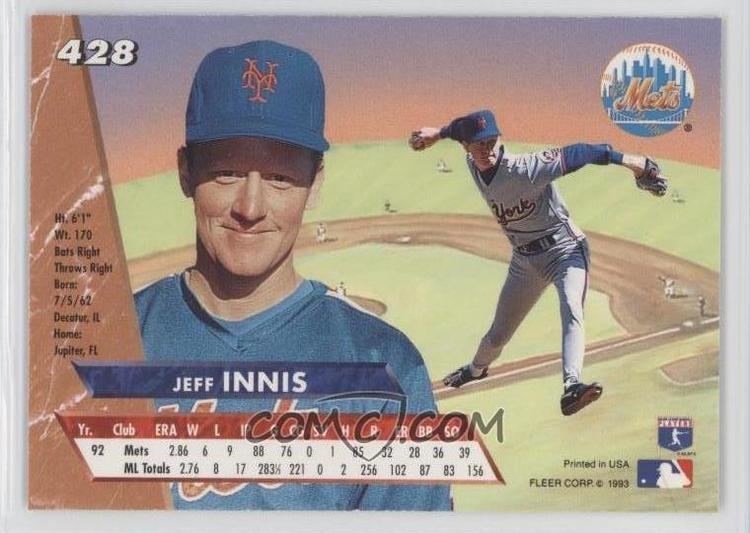
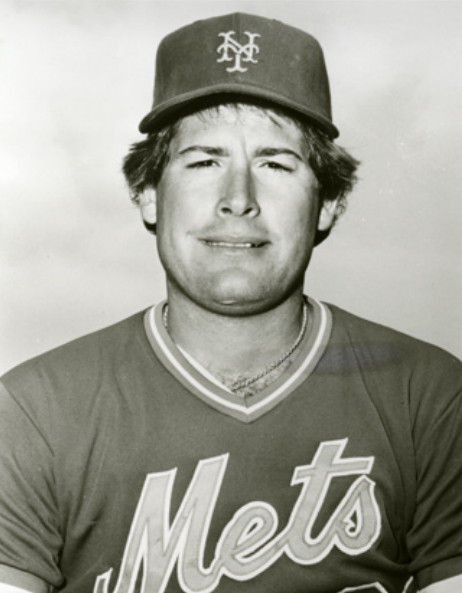
As I mentioned before, I have soft spot for pitchers with funky deliveries and the Mets’ ironman of the late 80’s and early 90’s was I-Man, the first Met ever to have a last name starting with the letter “I”, Jeff Innis.  During his brief but exclusively Mets career he went an uninspiring 10-20 but his career ERA as a setup man out of the pen was a sparkling 3.05.  He twice pitched more than 80 innings in a season and once threw 76. 


The skinny submariner was a joy to watch as his soft tossing stuff befuddled batters.  He never had huge strikeout numbers but no one was making any strong contact against him as they were not sure where to pick up the pitch as it was released near the top of the mound when he delivered.  His two types of breaking balls had a lot of movement that batters could not handle very well.  In this video clip you can see an example of how he pitched, a typical weak swing and an equally surprising accurate throw from catcher Mackey Sasser to nail the runner at first base.  Have a look here.

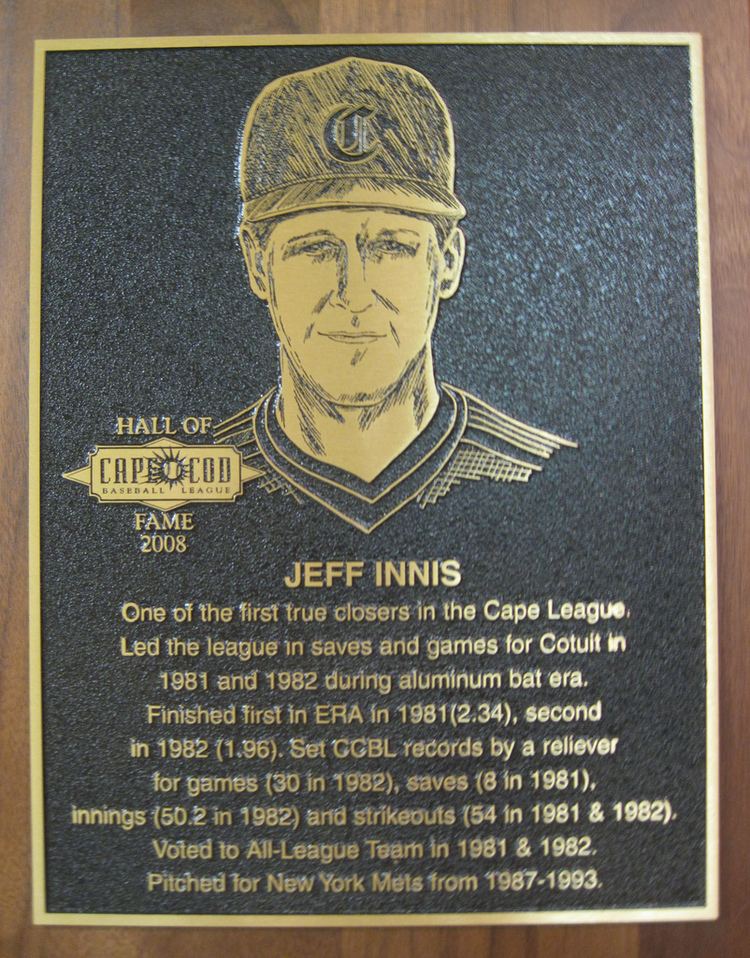
Innis attended the University of Illinois, earning a degree in psychology.  During the summers he played in the Cape Cod League for the Cotuit Kettleers.  He led the league in saves during one season, was an All Star both years he was there and helped his team to a championship.  During the period in which aluminum bats were fluffing up offensive stats, Innis finished his two-year stint in that league with a 2.15 ERA.  He was named to the Cape Cod Baseball League Hall of Fame in 2008. 

Drafted in the 13th round by the New York Mets, he started off his minor league career quite well.  In short season ball for Little Falls over a period of 28 games Innis went 8-0 with a 1.37 ERA.  That stellar performance had him jump up to Jackson in AA for the next season where he got his first taste of adversity, becoming a bit wild and finishing with a much less impressive 4.25 ERA.  That performance earned him a demotion the following year to Lynchburg where he got back to what made him so impressive the first time around, finishing the 1985 season with a 53 game record of 6-3 with a 2.34 ERA and 14 saves.  He then returned to Jackson during the 1986 season serving as the team’s closer and finished the season with a then club-record 25 saves, a 2.45 ERA and became a Texas League All Star. 


1987 was a breakthrough year for Innis who rode the Tidewater/New York shuttle several times.  For the Tides he was 6-1 with a 2.03 ERA and for the big club he went 0-1, but pitched in 17 games and finished his first taste of the big leagues with a respectable 3.16 ERA.  Over the next three seasons he continued to bounce back and forth between the majors and AAA despite never posting an ERA above 3.18.  He was mentored a bit by NY Mets submariner Terry Leach, though Innis didn’t drop down quite as much as Leach did.  He said he was trying to pitch more like Dan Quisenberry until his minor league pitching coach had him stand a bit more upright with improved results. 

In general Innis was considered a quiet, pensive teammate who was not part of the firecracker-tossing, bleach spraying or golf club swinging antics that were a part of the NY Mets’ negative lure of those days.  He was, however, a talented mimic and routinely would break up his fellow players with a spot-on impressive of the GM, Frank Cashen.

In 1991 Innis had the dubious distinction of setting a record for appearing in 69 games without recording either a win or a save.  For the season he finished 0-2, but with an ERA of just 2.66.  He famously asked for a raise and was told he had his nerve considering he had a losing record and no saves. 

He followed that up in 1992 with even more pitching – this time appearing in 76 games, earning a 6-9 record and a 2.86 ERA.  He didn’t wait long to get off the schneid, recording his first ever win on Opening Day. 

He would pitch just one more season in the big leagues, closing out his Mets career in 1993 with for him an uncharacteristically high 4.11 ERA over 67 games.  He was not offered a contract for the 1994 season and bounced around with the Twins, Phillies and Padres minor league organizations, switching to a knuckleball that he was never quite able to master. 

After retiring from baseball Innis earned his living selling commercial insurance and ran a private baseball academy.

11/1/19

OPEN THREAD: Most Loved and Most Reviled: Catcher


Reese Kaplan came up with a great idea for a series here.

Who was your all-time favorite at a position and who was your most reviled.

Next up... the home of Joe Torre, Jerry Grote, Mike Piazza, Todd Hundley, Mackey Sasser, Vance Wilson, and Alex Trevinoamong others: 

C

Reese Kaplan -- Hated Mets Relievers Part 4 of 4


I’ve always had a soft spot for guys who throw trick pitches, whether it’s a folly floater, a screwball, a knuckleball or a submarine style pitcher.  It’s a totally different look to befuddle batters and often leads to great success due to the great change in velocity or the sheer uniqueness of the spin or the delivery.  Some of them are even less stressful on the arm.  It makes you wonder sometimes why more people don’t embrace one of these weapons for their arsenal given the great success possible when you mix it up with the usual fastballs, changeups, curves and sliders.


The problem, of course, is that not only aren’t there many role models on whom to pattern your own effort, you also find that some of these trick pitches are difficult to control.  Teams have very little patience with folks who walk the ballpark, and thus the early goodwill built by reliever Doug Sisk turned him from reliable setup guy and occasional closer to someone who was booed so mercilessly that the manager went so far as to only use him in games on the road to help him avoid the hostility at home.

Once upon a time Doug Sisk was an asset in the Mets bullpen.  From ages 24 to 26 working exclusively in relief, Sisk posted a not-too-impressive 6-8 record over a 125 game intro the majors he owned a sparkling 2.12 ERA.  People simply were not hitting him.  Even during that prime period of his career he was walking too many and fanning too few – 117 free passes in 190 IP with only 69 strikeouts.  However, he yielded just 7 hits per 9 IP and only 0.1 HRs per 9 IP, a fine testament to the sinking action of his sidearm delivery.  With that kind of work keeping people from scoring it seemed like he could be a part of the bullpen future.

In his first full season with the Mets in 1983 he was in the bullpen when Tom Seaver made a triumphant return to the Mets, going mano a mano against none other than Steve Carlton after his six-year exile to Cincinnati.  When Seaver started fatiguing in the 7th inning, Sisk was summoned into the scoreless game for the final three frames.  The Mets rallied to score 2 runs to take a 2-0 lead and Sisk let a few men on in the 9th as would be typical of his appearances, but he managed to get Mike Schmidt to fly out and Tony Perez to whiff to earn his first major league victory.   

Pitching coach Mel Stottlemyre once said, “We use to use Sisk to get to Orosco.  Now they’re both game enders.  Doug’s sinker explodes. If I didn’t know better, I’d suspect him of throwing a spitter.”

There were certainly signs that this tightrope walking act couldn’t last forever.  In his 1984 season during which he delivered a 2.09 ERA he was walking an alarming 6+ batters per 9 IP.  Then in 1985 the wheels came off completely.  His ERA ballooned to 5.30 and the walks continued to pile up.  Arm troubles surfaced for the first time since he was in school (which, ironically, led him to the sinking sidearm pitch in the first place).  He felt he couldn’t get the action on the pitch which was sometimes erratic but always down explosively somewhere around the plate. 


In 1986 and 1987 Sisk was forced to pitch exclusively out of the stretch due to his ailing shoulder and could not get the full windup going anymore.  Ironically he posted his best strikeout numbers and reduced the walks, but by then he was a pariah.  In one hate mail letter posted to Sisk it said, “Take one Tylenol and one cyanide capsule – per day!”

After the World Championship season of 1986 Sisk managed to hang on for one more go in a Mets uniform before he was dispatched to Baltimore for one lackluster season. He then missed the entire 1989 season and most of 1990 due to surgery on both knees.  His career ended in Atlanta in 1991 during which he appeared in just 14 games and was out of baseball at age 33.

Nicknamed “Risk” for his propensity to put any lead into jeopardy, it was so bad that manager Davey Johnson got a Rolaids commercial due to the stress level watching Sisk perform on the mound.  He was one of the triumvirate of players affectionately known as the “Scum Bunch” along with Orosco and Danny Heep who controlled the back of the airplanes (including the infamous flight which caused a ban from United Airlines due to the $7500 in damages the players caused in a booze, cake and coke-fueled bacchanalia.   

It was perhaps best summed up by a fan who once quipped, “Sisk is the only pitcher I know who would walk the bases loaded and throw a double play grounder to get out of it.”  That, in a nutshell, is the man the fans loved to hate.